JOAN MIRÓ
In the 1960s, Joan Miró began stripping away anything superfluous until all he was left with was unadulterated expression. Gone were the playful flourishes of his earlier abstractions, the human-like quality of his shapes, the kinetic movement and subtle shading of his figures and planes. In their place, plumbed from the depths of his consciousness, was simplicity. The flight of the dragonfly needs nothing more than a line to speak of its movement and it is dwarfed by the enormity, and irregularity, of the sun. Miro began to paint not seeking representation or even emotion but a sort of unplaceable familiarity. If he reduced the world around him to core elements, and depicted the world as filtered through memory and experience, he could capture the purest essence of existence. The flight of the dragonfly is not about the dragonfly but about how both the smallest being and the largest concepts should take up the same space together.
PAUL KLEE
‘First of all,’, said Paul Klee when asked what was most important for a good life, ‘the art of living; then as my ideal profession, poetry and philosophy, and as my real profession, plastic arts; in the last resort, for lack of income, illustrations.’ Of course, Illustrations were more than mere income for Klee, they instead became some of the most important works of the 20th Century, but his tongue-in-cheek response has more truth than he lets on. Klee was a wildly individual artist, refusing the modes of the day and merging influence into a unique style. A soldier, a thinker, a writer, and a teacher at the Bauhaus School alongside his closest friend Wassily Kandinsky – Klee’s genius moved across mediums, but it is perhaps, against popular knowledge, his writing that was his greatest impact. Klee’s notebooks are amongst the most important pedagogical documents of modern art, his perspective exists beneath so much of the post-war and contemporary works we know today. Chiefly, that art was a serious pursuit best pursued unseriously, like a child approaches the blank page.
JOAQUÍN TORRES-GARCIA
There are no contradictions. Nothing is incompatible. These were the tenets that guided Torres-Garcia’s life, the life of a writer, painter, sculptor, teacher, theorist, muralist, novelist and architect; a renaissance man of the highest order. Born in Montevideo, Uruguay in 1874, he emigrated to Catalunya, Spain in 1891 and began a career as an artist. Over the next 50 years, he would go on to found numerous schools, groups and movements including the first European Abstract art group and push the art and culture of Europe and South America to its vanguard. It was the duality of his homeland and his adopted nations that drove Torres-Garcia, and his ability to hold this duality together in a single mind. He existed between places, carrying the identity of Uruguay with him everywhere, and in doing so he was able too to carry the new and the old, the classical and the avant-garde, reason and feeling, figuration and abstraction. There are no contradictions, he said, nothing is incompatible.
Paul Zweig
A poet, critic and memoirist, Zweig was admired by his friends and the literary circles around him, but remains in wider obscurity to this day. Zweig was an obsessive study of culture, peoples and moods. Cross pollination is clear in Zweig’s work, his techniques as a memoirist clear across his poetry. A careful and astute eye, self-possessed and self-aware, he wrote as if with a magnifying glass, looking at the offhand nature of the world and reading the truth from it. While he looked outwards, he found himself everywhere. He journeyed deeper into the self with each evocative work.
Jack Spicer
Spicer saw the poet as a radio, intercepting transmissions from outer space. Language was furniture, through which information navigated. He was a radical, both in his literary style and in his life, defying every convention at every turn. Refusing to allow his work to be copyrighted, Spicer ran a workshop called ‘Poetry as Magic’, and for him the statement was true. Poetry was a means to experience and translate the unexplainable, and had to be freely available for those who searched for truth. Spicer died penniless and with only small acclaim, like so many poets before and after him, but the ideas he laid out in his work have gone on to influence thousands of poets after him.
Amiri Baraka
Amiri Baraka was many things, and many things to many people. The most significant black poet of his generation, Baraka also is considered the founder of the Black Arts Movement and the Second Harlem Renaissance. Baraka wanted poetry, literature and art to be a legitimate product of experience. In doing so, he could hold a mirror up to a world in desperate need of self reflection. He was as fearless in his writing as he was in his activism, and he had a clear vision. The BAM became an aesthetic and spiritual sister of Black Power and Baraka’s voice was the most poignant, cutting and profound.
Robin Sparkes May 21, 2025
The ground beneath you may appear fixed, but the most constant quality of existence is change itself…
1h 33m
5.20.26
In this clip, Rick speaks with Bob Roth about cosmic consciousness.
<iframe width="100%" height="265" src="https://clyp.it/5ew1jqp2/widget?token=c51086da3b0493812595d05a61dde2c4" frameborder="0"></iframe>
Theodor Adorno May 19, 2026
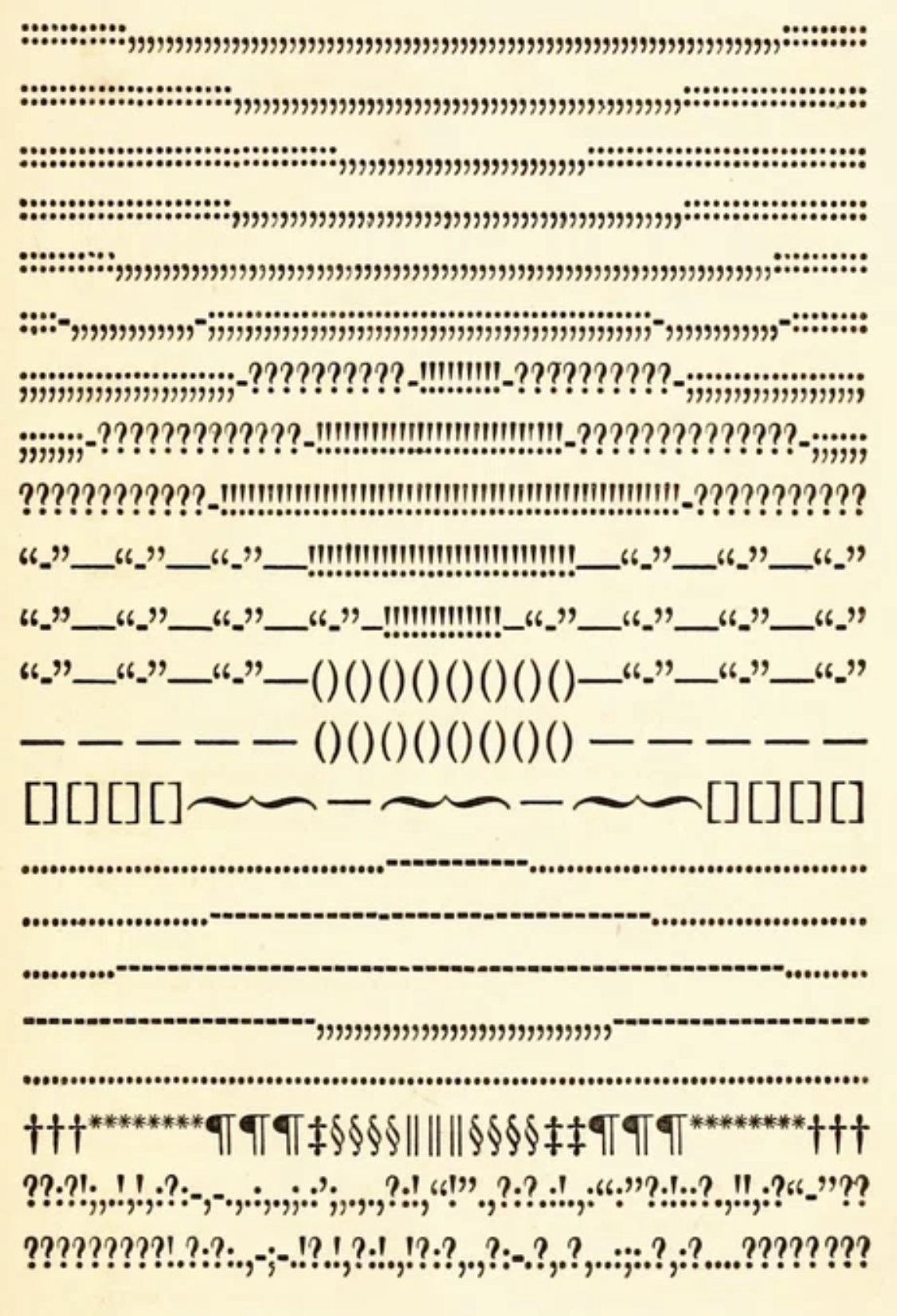
Only a person who can perceive the different weights of strong and weak phrasings in musical form can really feel the distinction between the comma and the semicolon…



Friday 22nd May
The Moon rises in Cancer, beginning the day with a soft, watery quality. In biodynamics, Cancer is connected with the leaf element, making the morning a favourable time to tend leafy plants, water seedlings, transplant greens, and support the lush, living growth of the garden. Later, the Moon moves into Leo, and the mood begins to shift from water to warmth. Leo is connected with fruiting plants, bringing our attention towards crops such as beans, tomatoes, courgettes, cucumbers, and other plants whose energy gathers into fruit and seed. Today carries a movement from leaf to fruit, from the nourishing waters of Cancer into the ripening warmth of Leo. We can begin by supporting the green, leafy life of the garden, before turning our attention to the plants that are reaching outward, flowering, swelling, and preparing to offer their fruit.
<style>
audio::-webkit-media-controls-timeline {display: yes;}
audio::-webkit-media-controls-current-time-display{display: yes;}
</style>
<audio id='a2' style="height: 5vh; width:100%;" controls="" name="media"><source src="https://clyp.it/npoqwro2.mp3?token=b967f5972f433b394fc6bb10fa965588"></audio>